

AAS-in-Asia Comes to Pakistan: A Conversation with Tajwar Ali



Can you start by telling us a little about yourself and what brought you into this academic path and eventually into organising this conference?
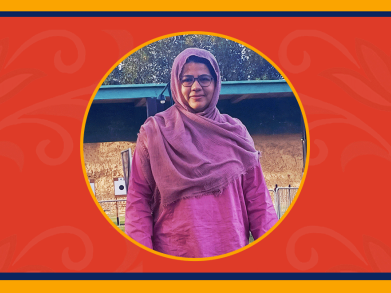
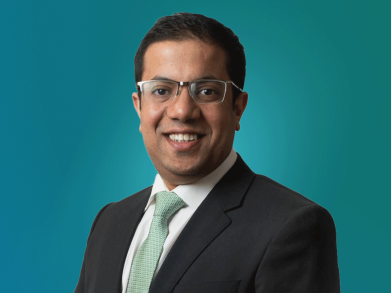
My name is Tajwar, and I graduated from LUMS in 2010. My major was Social Sciences, and my minor was Computer Sciences, though I was never good at coding. It was my sheer love for the subject, and maybe systematic thinking, that made me keep going back to CS courses to get my worst grades ever. That was, however, balanced by my relative ease with the SS subjects.
Fast forward, over the next decade or so, I worked with the government, as well as in the public and private sector, both national and international, and also on a few startups. Those years gave me a breadth of experience I don't think I could have gotten any other way.
In 2022, I started working with the Pakistan Hub (LUMS) of the Cultivating the Humanities and Social Sciences & Supporting Under-Represented Scholars of Asia (CHSS) project by the Association for Asian Studies, and I think there has been no looking back since then.
The culmination of all that hard work was winning the bid to host the AAS-in-Asia 2026 conference in Lahore. Through this project, I was able to meet and collaborate with 141 scholars from within Pakistan, each of them a real agent of change. Being part of the team that got this proposal through felt like my way of giving back to all of them.
So here we are, all set to host what I think is going to be the best AAS-in-Asia conference yet.
What does it personally mean to you that the AAS-in-Asia conference is happening in Pakistan for the first time at Lahore University of Management Sciences?
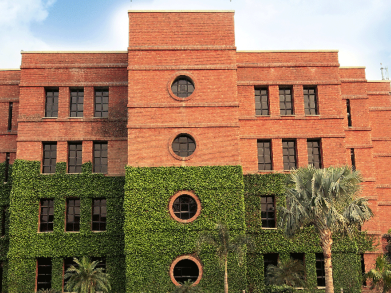
It's hard to put into words, honestly. LUMS has always been home. LUMS has always had answers. LUMS has shaped the way I think and feel about the world. My friendships from LUMS have lasted two decades. LUMS has always given without expecting anything in return. Dr. Furrukh Khan was my advisor when I was a student, he is the one who has seen me through most of my career, and has been a constant.
The feeling of being able to put a pin on the globe to mark that AAS-in-Asia was hosted in Pakistan for the first time, and that too at LUMS, is like that of a child who can do something for their parent for the first time. For me, it is life-altering.
Pakistan has my heart. It is so much more than what people know about it. Lahore, for me, is eternal. It is a feeling, not a place. It welcomes, absorbs, transforms, and uplifts. And now both Pakistan and Lahore will be able to host outstanding scholars from all over the world. And I had something to do with it. God, this feeling is a force to be reckoned with, don't you think?
When people arrive for this conference, what kind of experience do you hope they walk into, both academically and personally?
When people walk into this conference, I want them to feel two things immediately: they are in exceptionally capable hands, and they are somewhere unlike anywhere else in the world.
On the academic and organisational side, I have spent enough time working with the various committees and departments at LUMS to know that what they have built here is extraordinary. The systems, the people, the culture of excellence, it all runs deep. Attendees won't have to worry about a thing. What I hope they do instead is focus entirely on the discourse, the conversations that spill out of panels and roundtables into corridors, the connections between Pakistani scholars and the global academic community that perhaps would never have happened otherwise. That exchange, for me, is the whole point.
And then there is Lahore itself. I think what will strike people most is the contrast, a city where a 400-year-old Mughal monument stands quietly next to a buzzing café, where the ancient and the modern don't just coexist, they converse with each other. That tension, that layering of time, is something you can feel just walking through the city. Scholars who study history, culture, and identity will feel it in their bones.
Lahore doesn't need much help making an impression. I just feel lucky that we get to be the reason people finally show up.
When you imagine the conference opening day, who or what are you most looking forward to seeing in the room, and what kind of energy are you expecting from it?
This question excites me! I have had the chance to attend AAS-in-Asia conferences in Indonesia and Nepal and made some wonderful friends there. Seeing them again is something I have genuinely been looking forward to. And it won't just be them, the AAS team, the fellows and scholars from all five CHSS hubs, the local cohorts who trained at LUMS, faculty, colleagues from organizations I've worked with over the years, friends who have submitted panels. In many ways, opening day is going to feel like a grand reunion of my favorite people from all corners of the world, all in one room, in my city.
The energy? My children would call it psyched. And honestly, for once, I think they've got exactly the right word.
Was there any part of your work on this conference that felt unexpectedly emotional or meaningful along the way?
This project overlapped with some of my personal, what I like to call, growth reminder notes from the universe. There were stretches where showing up at 7 am through midnight or 1 am for scholars attending our workshops at LUMS was genuinely all I had to hold onto. A sense of purpose and direction, when I needed it most.
But perhaps the meaning and emotion were most present in looking at my children waiting for conference and workshop sessions to end, and sometimes even sitting through them. What would a 9 and 5-year-old have to do with how to conduct research in a conflict zone, or how to publish academic articles? But they were there, like my little warriors, through it all.
And I think that is exactly where all the emotion lives, in those hours, in those rooms, in those people. It translates, quietly, into everything we are now building for this conference. Sometimes, rising above the self and creating something bigger than the mundane is all the emotion and meaning one needs.
What has been the most exciting challenge in bringing an international academic conference to Lahore?
The opportunity to showcase Lahore, for all its glory. To talk about LUMS, and about other institutions across the country and the great work they are doing. To be, in some ways, a walking, talking testament to Pakistan and its scholars.
And at the same time, facing harder questions, about security, about facilities, about logistics, and answering them honestly. Telling everyone that Lahore is human, like any other city in the world. It has its own darkness and its own light, and of course, a beautiful spectrum of grey in between.
That tension, between pride and honesty, has been both the most exciting and the most meaningful part of this whole process. Because getting people to say yes to Lahore feels like a win every single time.
What is something you genuinely hope will surprise international visitors about Pakistan's academic and cultural energy?
The vibrance. The fluidity. The sheer, unapologetic love for ideas, for people, for conversation. Everyone has an opinion in Lahore, and mind you, opinions that are worth weighing in gold. I think what will genuinely catch people off guard is how alive the intellectual energy here is, how Pakistani scholars are not just participating in global academic conversations but pushing them forward, often under circumstances that would have stopped others entirely. There is a resilience to the curiosity here that I find extraordinary. And then on top of that, the warmth. The way people are welcomed, fed, looked after, and made to feel like they have always belonged. Oh, the love. There is really nothing quite like it.
If an attendee had only 24 hours in Lahore, what three things would you insist they experience?
Old Lahore, without question. Walk through the Walled City, stand inside the Badshahi Mosque, let the weight of centuries settle on you. Then contrast it, go to somewhere like MM Alam or Raya and see the city that is being built right now, young and ambitious and completely sure of itself. And then eat. Eat everything. Let someone who knows Lahore order for you and just say yes to all of it. Those three things alone will tell you everything you need to know about this city.
Looking back at the whole process, what is something you learned while organizing this conference that surprised you?
That teamwork isn't just important, it's everything. That getting things done, consistently and reliably, is itself a form of leadership. And perhaps most importantly, that the quality of the people you attract is a direct reflection of who you are showing up as. Being someone whose name becomes a solution, that idea surprised me with how true it turned out to be. I have met some of the most remarkable people through this process, and I don't think that was a coincidence. You become a great person to work with, and great people find their way to you. And also, it is essential to be surrounded by friends and mentors who trust your potential, and keep pushing you to reach it.